
Warm-Up & Activation
Warm-Up & Activation
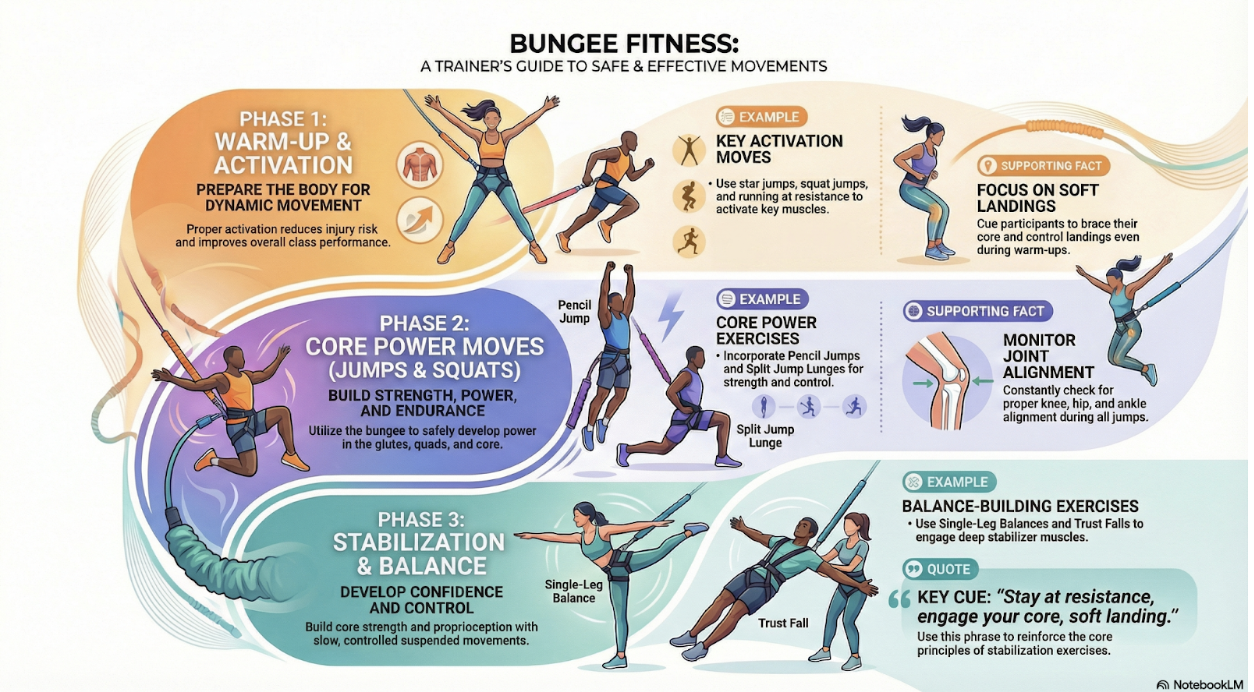
Purpose: Prepare muscles, joints, and the nervous system for dynamic movement. Proper activation reduces injury risk and improves performance.
Key Movements:
- Head rolls
- Shoulder rolls
- Bungee-assisted cat–cow
- Running at resistance
- Ankle mobility (circles or calf raises)
- Star jumps (focus on soft landings)
- Squat jumps
- Split squats (each side)
- Hip openers / closers
- Reach out at resistance + arm circles
- Robot arms
- Standing bungee brace (core activation)
Trainer Tips:
- Always cue participants to brace the core and control movement.
- Encourage soft landings even during warm-up hops and jumps.
Warm-Up: Basic Mobility & Activation Exercises
A well-structured warm-up is non-negotiable. Because bungee movement involves suspension, elastic resistance, and dynamic loading, the body must be properly prepared before progressing into higher-energy or plyometric exercises.
A plyometric exercise is a fast, explosive movement that uses the stretch-shortening cycle (SSC), where muscles are rapidly stretched (lengthened) and then immediately contracted to generate maximum force in a short time, like in jumping, hopping, or explosive push-ups, to build strength, power, and speed. They bridge strength training and sports performance by improving the muscle’s ability to react powerfully and quickly.
The warm-up serves to prime the joints, activate key muscle groups, and introduce the body to the unique support and resistance of the bungee system. This preparation allows participants to move with confidence, control, and power while reducing the risk of injury.
Key Reasons We Warm Up
Protects Joints & Soft Tissue
Bungee fitness reduces impact, but it still places changing forces through the ankles, knees, hips, shoulders, and spine. Mobilising joints and increasing blood flow helps tissues adapt safely to elastic resistance and dynamic movement.
Activates the Core & Glutes
The core and glutes are the foundation of all bungee movement. Proper activation improves balance, stability, and posture, allowing participants to control the bungee rather than being pulled by it.
Improves Movement Quality & Technique
When muscles are activated and joints are mobile, participants move more efficiently. This leads to better alignment, cleaner landings, and stronger execution of jumps, squats, and combinations.
Reduces Injury Risk
Cold muscles and stiff joints increase the likelihood of strain, poor landings, and loss of control. A progressive warm-up lowers injury risk and supports long-term participation.
Builds Confidence & Readiness
Introducing gentle bungee contact during the warm-up allows participants to acclimatise to the harness and cord. This builds trust in the equipment and encourages confident movement in the main workout.
Cardiovascular & Respiratory System
Bungee Fitness as Cardio + Strength
- Elevates heart rate safely through dynamic movement
- Supports both aerobic and anaerobic energy systems
Breathing Cues
- Exhale during exertion: jumps, tucks, pushes
- Inhale during recovery: lowering, landings, pauses
Monitoring Intensity
- Encourage participants to work at perceived exertion appropriate for their fitness level
- Offer modifications where required (lower jumps, removing the jump, slower tempo)
Instructor Insight
The warm-up isn’t just preparation – it’s the foundation of a great bungee class. When the body feels supported, stable, and switched on, participants move better, feel safer, and enjoy the session more.
Teaching Reminder
As an instructor, your warm-up sets the tone, safety standard, and energy of the class. Never rush it. A strong warm-up leads to:
- Better performance
- Happier clients
- Safer, more effective classes
A warm up should be around 8-10 minutes long.
Goal: Prepare joints and muscles for bungee movement. Focus on shoulders, hips, core, and glutes.

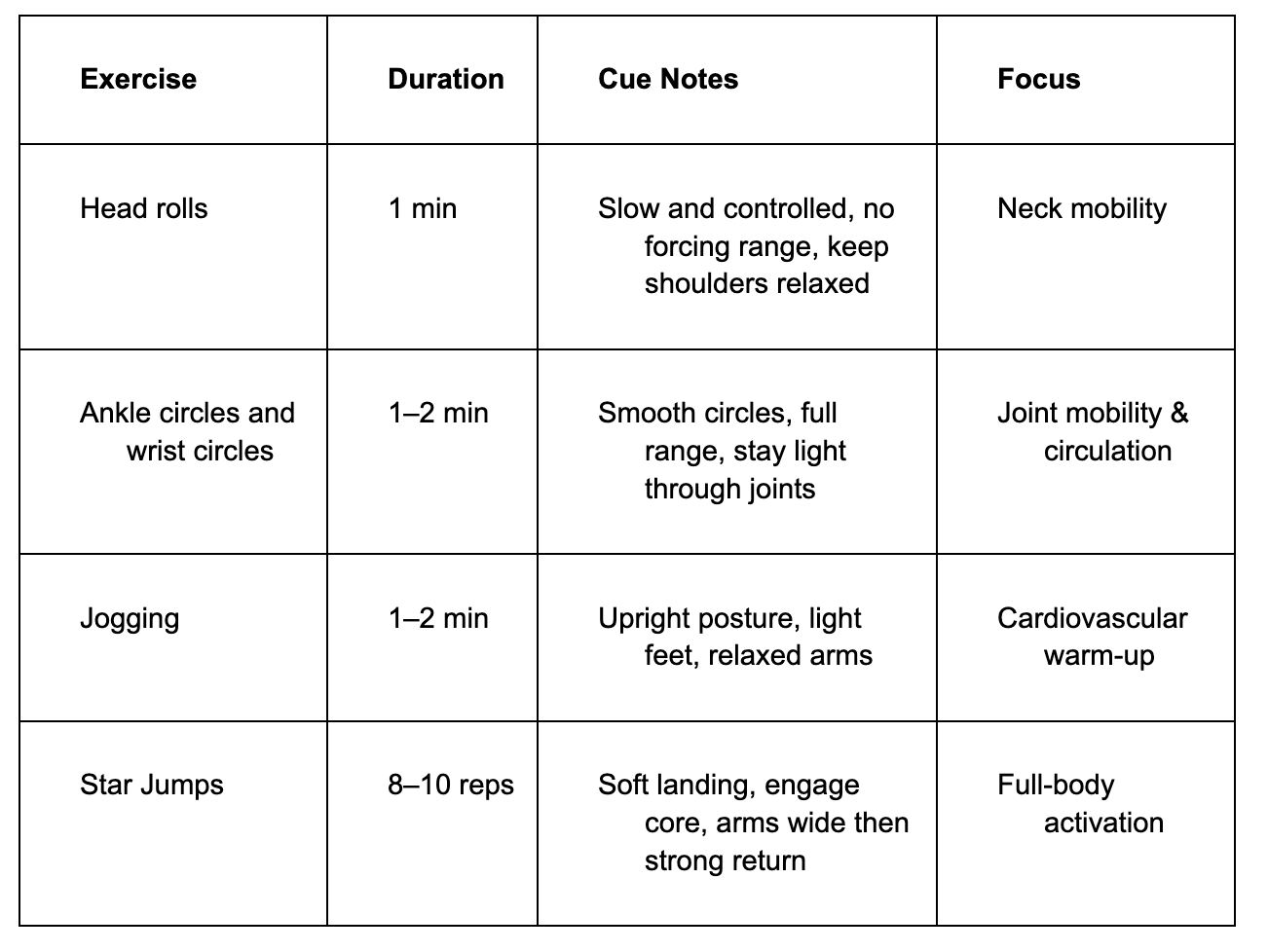
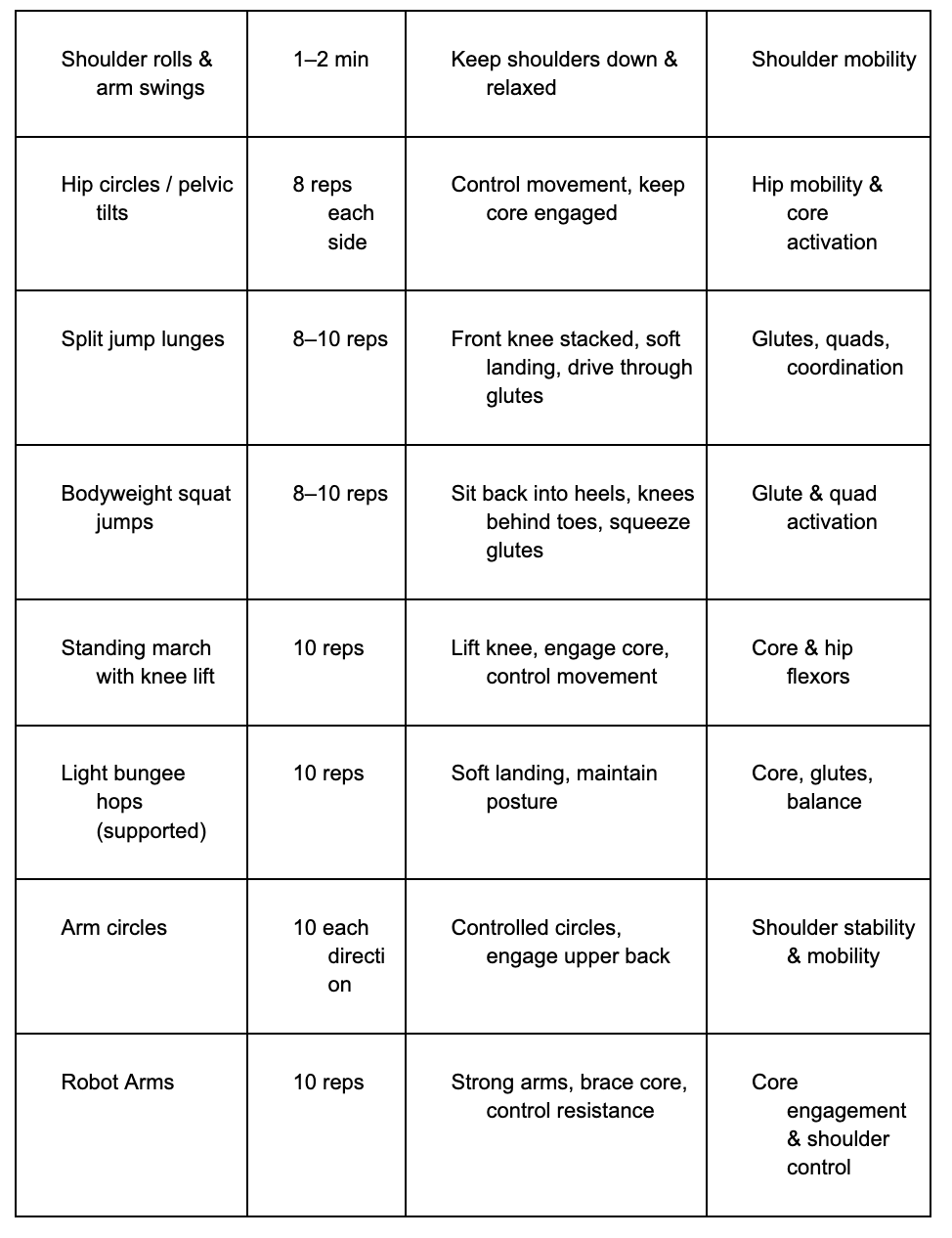

Expert Tip: Never underestimate a good warm-up. It primes the body, protects joints, and gives participants confidence to move dynamically.