
Planes of the Body and How This Applies in Bungee Fitness
Planes of the Body and How This Applies in Bungee Fitness
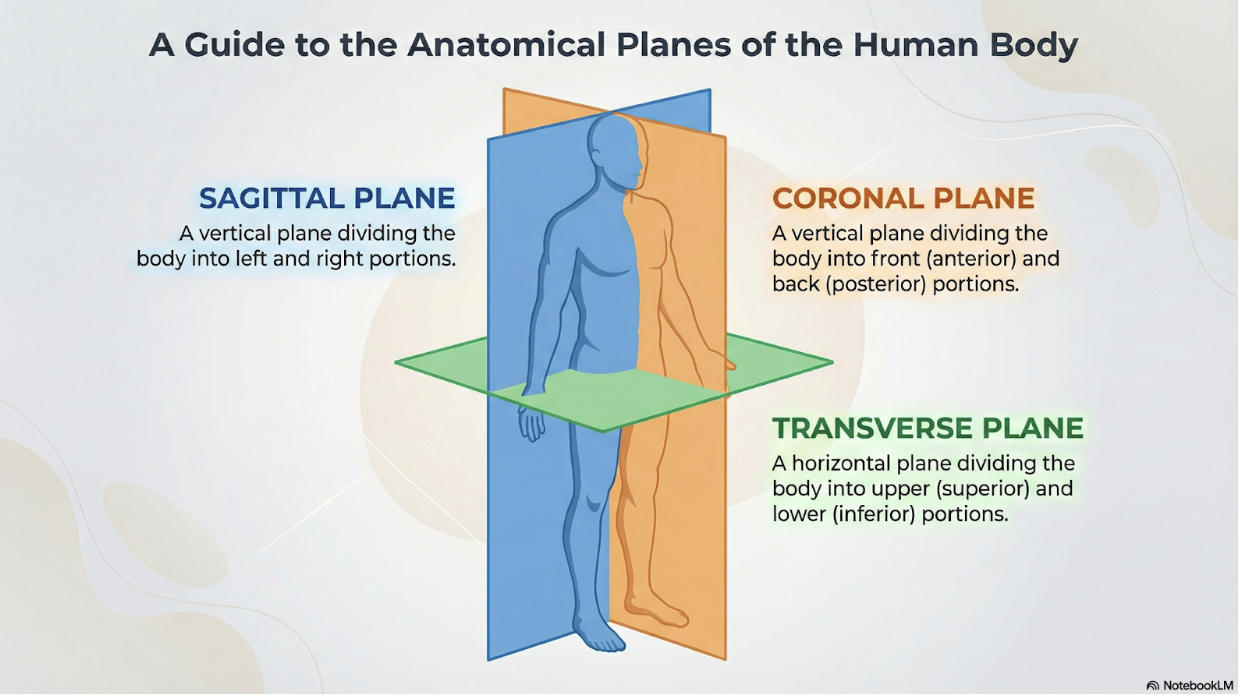
The human body moves in three main planes. Understanding these planes helps instructors analyze movement, prevent injury, and cue participants for optimal engagement. In bungee fitness, because movements are dynamic, multi-directional, and often suspended, awareness of these planes is crucial.
Sagittal Plane (Front to Back)
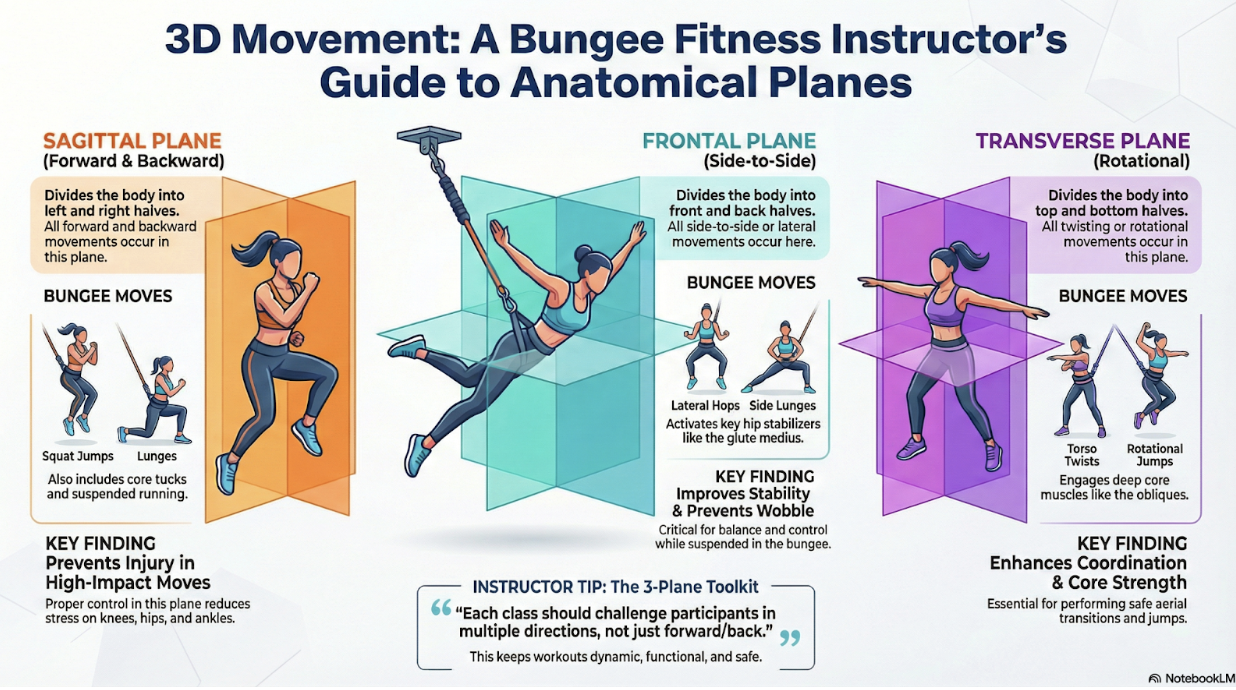
- Description: Divides the body into left and right halves. Movements occur forward and backward.
- Common Bungee Movements:
- Squat jumps
- Lunges (forward/backward)
- Core tucks and knee lifts
- Running or jogging in place while suspended
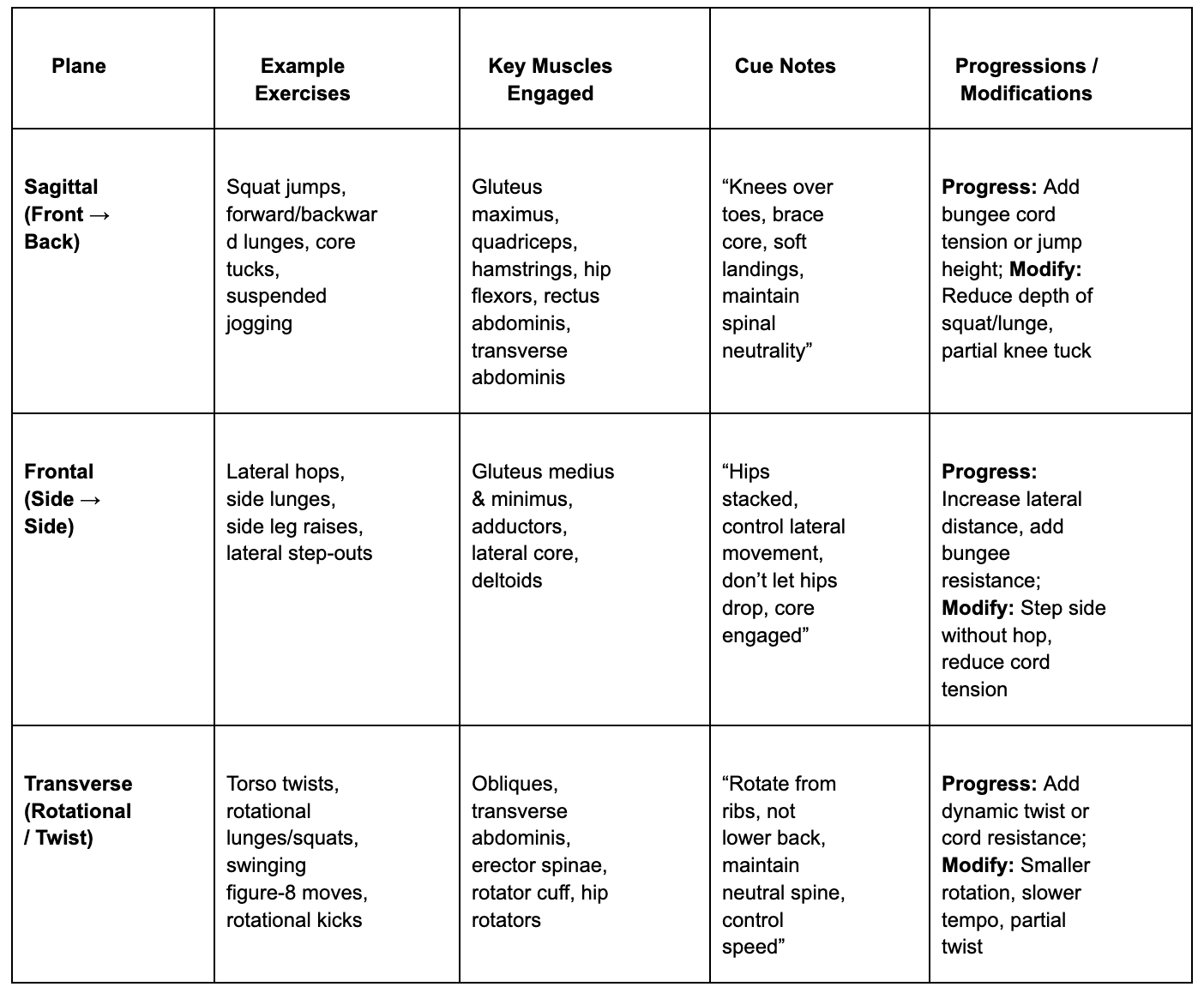
- Key Muscles Engaged: Gluteus maximus, quadriceps, hamstrings, hip flexors, rectus abdominis, transverse abdominis
- Cueing Tips:
- Emphasize alignment of knees over toes
- Encourage spinal neutrality
- “Drive through your glutes, brace your core, and control the landing”
- Why it matters: Many high-impact moves happen in the sagittal plane; proper control reduces knee, hip, and ankle injuries.
Frontal Plane (Side to Side)
- Description: Divides the body into front and back halves. Movements occur side to side.
- Common Bungee Movements:
- Lateral jumps or hops
- Side lunges
- Lateral raises
- Key Muscles Engaged: Gluteus medius, gluteus minimus, adductors, lateral core muscles, deltoids
- Cueing Tips:
- Keep hips stacked
- Control lateral movement with core engagement
- “Step wide, keep knees aligned, and don’t let your hips drop”
- Why it matters: Side-to-side moves improve stability, balance, and proprioception, which is especially important in suspension to prevent wobble or loss of control.
Transverse Plane (Rotational)
- Description: Divides the body into top and bottom halves. Movements occur rotationally or twisting around a vertical axis.
- Common Bungee Movements:
- Torso twists
- Rotational lunges or squats
- Swinging/rotational movements
- Key Muscles Engaged: Obliques, transverse abdominis, erector spinae, rotator cuff muscles, hip rotators
- Cueing Tips:
- Maintain core stability and neutral spine
- “Rotate from your ribs, not your lower back”
- Control speed to avoid momentum-driven injury
- Why it matters: Rotation challenges balance and stabilizer muscles, enhancing coordination and engaging deep core muscles essential for safe jumps and aerial transitions.
Practical Application in Class Design
- Include movements in all three planes for balanced strength, flexibility, and injury prevention.
- Example class flow:
- Warm-up → sagittal plane: squats, lunges, core tucks
- Main moves → frontal plane: lateral hops, side lunges
- Core / advanced moves → transverse plane: twists, rotational jumps
- Cool-down: gentle stretches incorporating multiple planes
Instructor Tip
“Think of planes of motion as a toolkit. Each class should challenge participants in multiple directions, not just forward/back. This keeps workouts dynamic, functional, and safe, while engaging stabilizers that prevent common bungee injuries.”
Sagittal Plane (Front to Back)
Example Bungee Movements:
- Squat jumps with bungee support
- Forward and backward lunges
- Knee tuck jumps
- Suspended jogging or high-knee march
- Which muscles are you actively cueing during a squat jump? How would you remind participants to engage these muscles?
____________________________________________________________________________
____________________________________________________________________________
- How does the bungee cord support or challenge sagittal plane movements compared to floor-based jumps?
____________________________________________________________________________
____________________________________________________________________________
- Identify one common alignment mistake in forward lunges. How would you correct it using cues?
____________________________________________________________________________
____________________________________________________________________________
- How could you modify a sagittal plane movement for a beginner with weak knees or hips?
____________________________________________________________________________
____________________________________________________________________________
Tip: Visualize the forward/back motion line and cue participants to maintain core stability and soft landings throughout.
Frontal Plane (Side to Side)
Example Bungee Movements:
- Lateral hops or side-to-side jumps
- Side lunges (with or without bungee support)
- Side leg raises / lateral resistance work
- Lateral step-outs with cord tension
- Which stabiliser muscles help maintain balance during lateral hops?
____________________________________________________________________________
____________________________________________________________________________
- How can awareness of the frontal plane help prevent hip or knee injuries inside lunges?
____________________________________________________________________________
____________________________________________________________________________
- How would you cue participants to maintain hip alignment while performing side-to-side jumps?
____________________________________________________________________________
____________________________________________________________________________
- How does the cord’s resistance affect lateral movements, and how could you increase or decrease difficulty safely?
____________________________________________________________________________
____________________________________________________________________________
Tip: Remember, frontal plane moves improve balance and hip stability, which is especially important when the bungee cord adds instability.
Transverse Plane (Rotational / Twisting)
Example Bungee Movements:
- Torso twists while tucking knees or holding harness
- Rotational lunges or squats with cord support
- Swinging movements or figure-8 twists in suspension
- Bungee-assisted rotational kicks or side twists
- How do rotational movements challenge core stabilizers differently than sagittal or frontal plane moves?
____________________________________________________________________________
____________________________________________________________________________
- What are common mistakes in transverse plane exercises, and how do you cue participants to maintain a neutral spine?
____________________________________________________________________________
____________________________________________________________________________
- How can you progress a transverse plane exercise for more advanced participants without compromising safety?
____________________________________________________________________________
____________________________________________________________________________
- How does the cord change the force during rotation, and what does that mean for balance and control?
____________________________________________________________________________
____________________________________________________________________________
Tip: Remember that rotational moves engage deep core and stabilisers. Encourage controlled motion over speed to protect joints and the spine.
Cross-Plane Application (Class Design)
- Plan a 5–minute warm-up incorporating all three planes. Which exercises would you choose for each?
____________________________________________________________________________
____________________________________________________________________________
- How does alternating planes within a class enhance balance, coordination, and injury prevention?
____________________________________________________________________________
____________________________________________________________________________
- Choose a favorite bungee exercise. Identify the plane it works in and suggest a modification for each plane.
____________________________________________________________________________
____________________________________________________________________________
- Reflect: Are there exercises in your repertoire that unintentionally stay in one plane? How could you adapt them to create a more balanced class?
____________________________________________________________________________
____________________________________________________________________________
Instructor Tip:
When planning your class, think of planes of motion as a toolkit for safe, dynamic, and functional workouts. Challenging participants in multiple directions engages stabilizers, prevents overuse injuries, and makes your classes more fun and effective.”