
📌 Module — Safety & Protocols

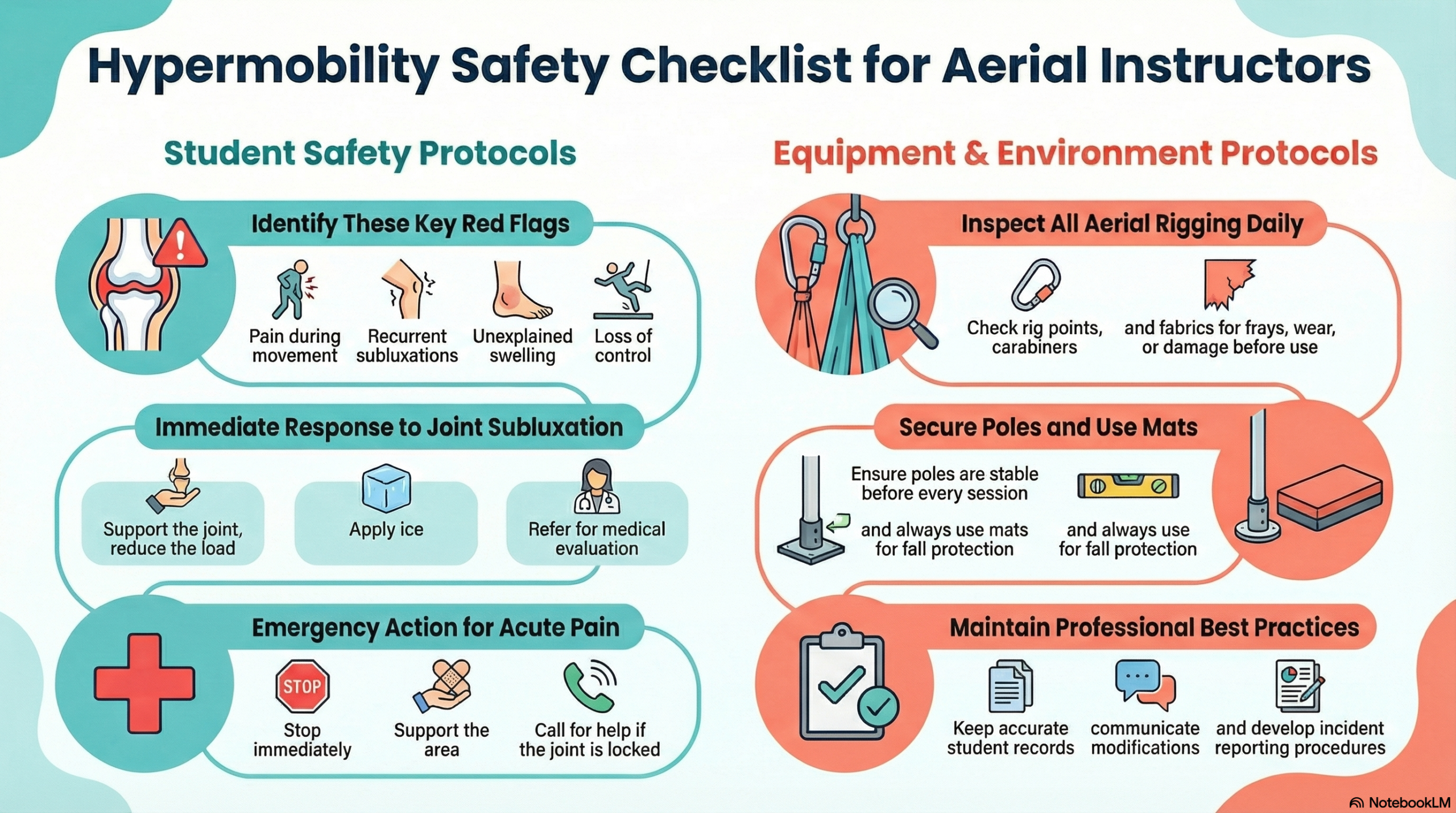
📌 Module — Safety & Protocols for Hypermobile Aerial & Pole Fitness
Goal: Equip learners with the knowledge and strategies to identify risks, prevent injuries, and respond effectively to emergencies while training hypermobile athletes.
Module Learning Objectives
By the end of this module, learners will be able to:
- Identify red flags and contraindications in hypermobile students
- Recognize and respond to joint subluxation, instability, or injury
- Implement emergency strategies for acute hyperextension or pain
- Ensure equipment safety and setup standards for aerial and pole fitness
- Establish protocols to protect both students and instructors
Section 1 — Red Flags & Referral
Overview:
- Hypermobile athletes may appear capable, but certain signs indicate increased injury risk.
- Red flags include:
- Pain during movement or at rest
- Recurrent subluxations or dislocations
- Unexplained swelling or inflammation
- Fatigue-induced loss of control
- Hyperextension beyond functional limits
Protocol:
- If red flags are observed:
- Stop the activity immediately
- Assess the joint and symptoms
- Refer the student to a medical professional (physio, GP, specialist)
- Document the incident and adaptations made
Section 2 — Recognizing Joint Subluxation & Instability
Signs of Subluxation or Instability:
- Audible pop or click during movement
- Sudden joint giving way or collapsing
- Visible misalignment or wobble
- Acute pain or discomfort
- Muscle guarding or inability to hold position
Response Protocol:
- Support the joint immediately
- Reduce load and prevent further movement
- Apply ice if acute injury occurs
- Guide the student to medical evaluation
- Modify exercises for future sessions
Section 3 — Emergency Strategies
Acute Pain / Hyperextension Response:
- Stop the session immediately
- Support the affected area
- Avoid forcing the joint back into position
- Monitor vital signs if severe pain occurs
- Call emergency services if joint is locked, visibly dislocated, or if circulation/nerves are compromised
- Document the incident and review for preventive measures
Preventive Emergency Planning:
- Keep first aid kit accessible
- Know nearest medical facilities
- Have emergency contact details for each student
- Train staff on basic joint injury response
Section 4 — Equipment Safety for Aerial & Pole
Aerial Rigging:
- Regularly inspect rig points, carabiners, and hardware
- Use only rated aerial equipment
- Check ropes, silks, and hoops for frays, wear, or damage
Pole Fitness:
- Check pole stability and floor mounting
- Ensure clean, dry poles before every session
- Use mats for landing or fall protection
Environment Safety:
- Ensure sufficient space around apparatus
- Keep floors clear of hazards
- Maintain appropriate lighting and ventilation
Section 5 — Professional Protocols
Best Practices for Instructors & Coaches:
- Maintain accurate student assessment records
- Require medical clearance for high-risk students
- Communicate clearly about limitations, modifications, and safe progressions
- Include prehab and stability exercises in every session
- Develop incident reporting procedures
- Promote student self-awareness and encourage reporting of pain or instability