
Suspension Training vs Bungee Fitness: Understanding the Difference
Suspension Training vs Bungee Fitness: Understanding the Difference
While both suspension and bungee fitness use suspension to support movement, they are fundamentally different training methods in how they load the body, challenge stability, and create movement experiences.
Understanding these differences is essential for teaching bungee fitness safely, effectively, and creatively.
Suspension training: Bodyweight Suspension Training
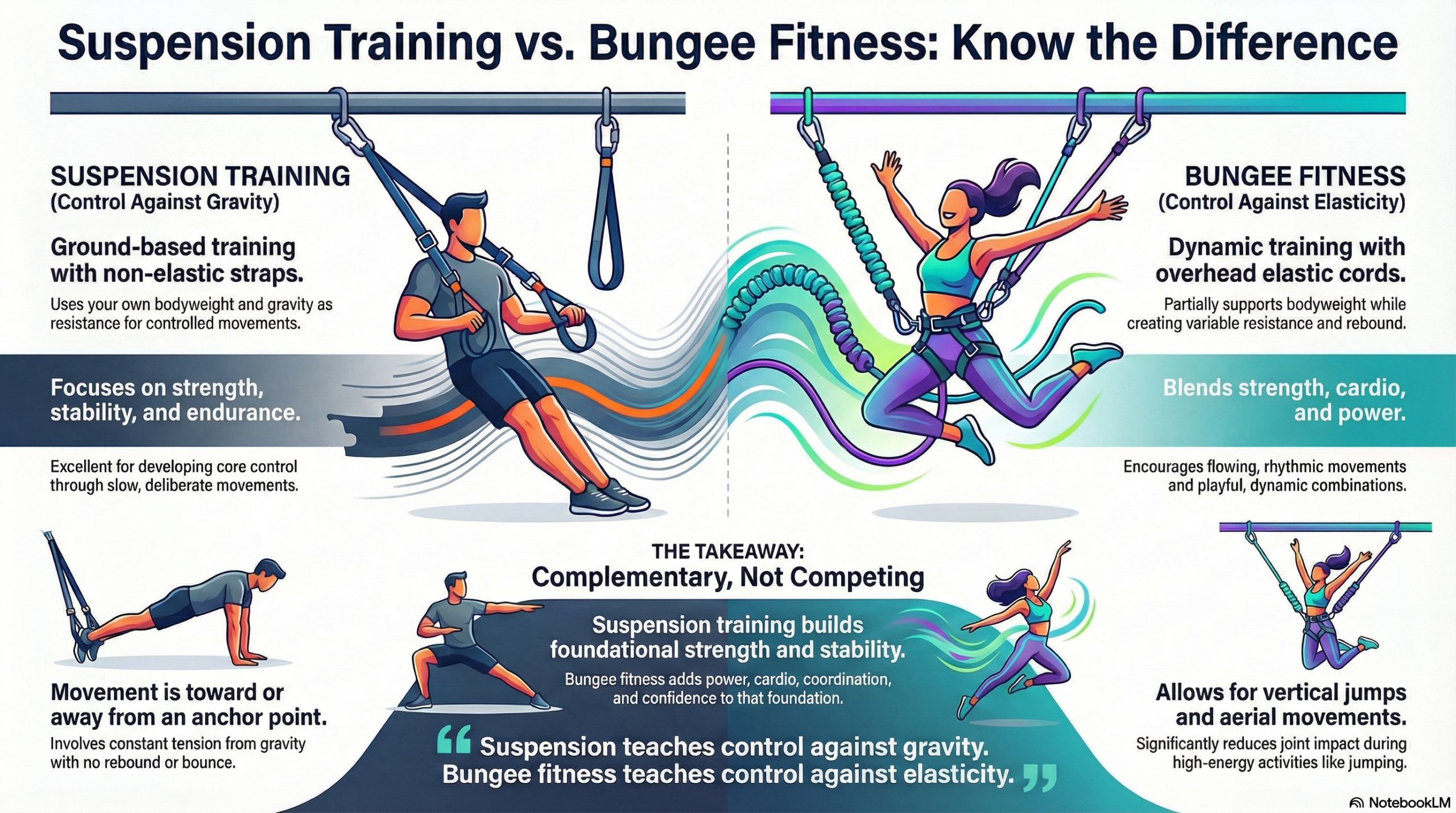
Suspension training is a ground-based suspension system where the body is supported by non-elastic straps anchored from a single point. The resistance comes from the participant’s own body weight and gravity, with the straps providing stability and leverage.
Key Characteristics of Suspension Training:
- Non-elastic suspension (no rebound or stretch)
- Constant tension from gravity
- Primarily strength-focused
- High demand on core stability through static control
- Movement occurs mostly towards or away from the anchor point
Suspension training excels at developing controlled strength, muscular endurance, and stability, especially in slower, more deliberate movement patterns.
Bungee Fitness: Elastic Suspension & Dynamic Movement
Bungee fitness uses elastic cords attached overhead that partially support body weight while creating variable resistance and rebound. This allows for vertical movement, jumping, and dynamic combinations that are not possible in non-elastic systems.
Key Characteristics of Bungee Fitness:
- Elastic suspension with rebound
- Variable resistance depending on cord stretch
- Combines strength, cardio, and power
- Encourages dynamic, flowing movement
- Reduces joint impact during jumps and landings
Bungee fitness allows participants to move freely in multiple planes, combining strength, cardio, balance, and playfulness within the same session.
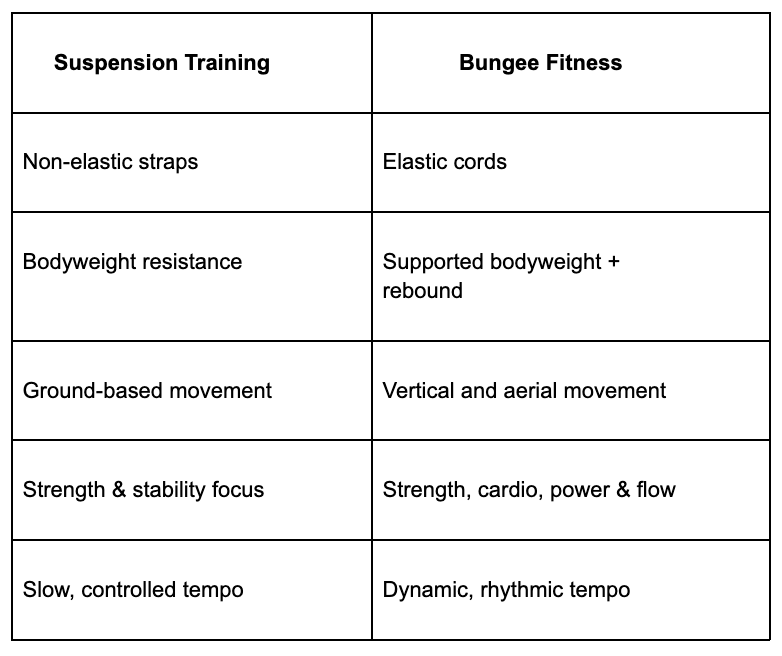
Key Differences at a Glance
In bungee fitness, instructors must account for elastic load, rebound forces, and changing tension throughout each movement. This means:
- Cueing soft landings and controlled returns
- Teaching core bracing against elastic pull
- Programming with progressive exposure to bounce and height
- Understanding how momentum affects joints and balance
Expert Insight:
Suspension teaches control against gravity. Bungee fitness teaches control against elasticity.
Complementary, Not Competing
Suspension training and bungee fitness are not competing methods — they are highly complementary.
- Suspension training builds foundational strength and stability
- Bungee fitness adds power, cardio, coordination, and confidence
Many instructors find that combining both creates stronger, more resilient movers who can handle dynamic load safely.