
Grip Fatigue & Endurance Limits
Grip Fatigue & Endurance Limits
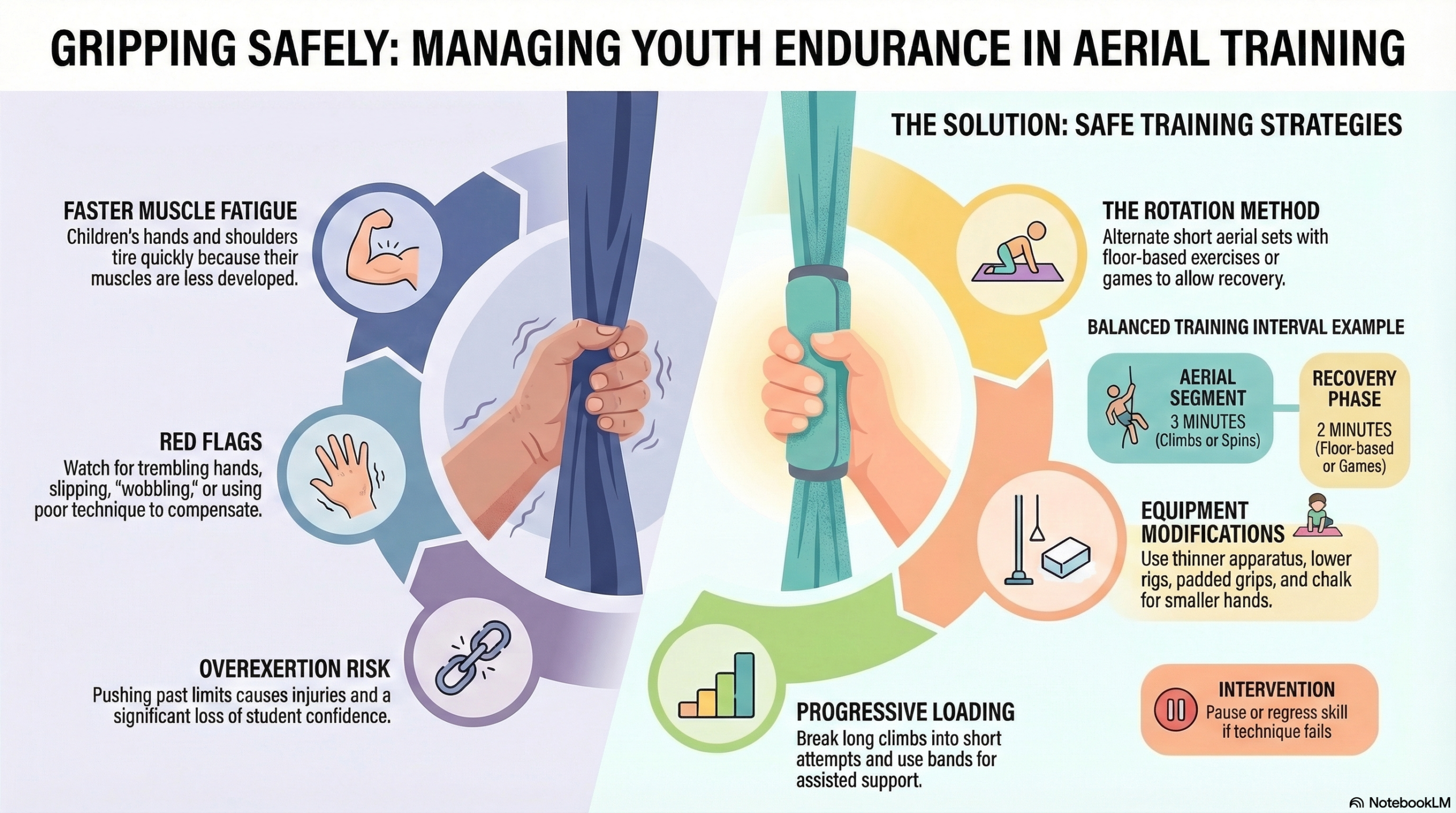
Children’s hands, forearms, and shoulders fatigue faster than adults because their muscles are smaller and less developed. Overworking grip strength can lead to poor technique, injuries, or loss of confidence.
Practical Tips for Instructors:
- Limit grip-intensive moves to short sets with frequent rest breaks.
- Rotate activities between aerial, floor, or lower-body exercises to allow recovery.
- Gradually introduce grip-strengthening exercises over weeks rather than pushing for endurance immediately.
- Watch for signs of fatigue, such as wobbling, slipping, or letting go prematurely, and adjust activity immediately.
Practical Examples:
Hanging & Pulling Moves:
- Break aerial climbs or inversions into 2–3 short attempts instead of long continuous hangs.
- Use assisted grips or bands to support children while building endurance. EG, Knee pads, gloves and extra layers or chalk.
Spinning & Static Holds:
- When teaching start with reduced holds, gradually increasing as strength improves.
- Encourage controlled breathing to help maintain grip and reduce tension.
Rotating Activities for Recovery:
- Alternate aerial segments with floor conditioning, flexibility, or games if you notice them finding the content a challenge.
- Example: 3 minutes of pole climbs → 2 minutes of floor based exercises → 3 minutes of spins.
Progressive Grip Training:
- Introduce age-appropriate grip exercises like hanging on a low bar, climbs, or pull ups.
- Avoid forcing children to hold challenging grips for long periods; build strength incrementally.
Equipment Modifications:
- Use padded grips, mats, or lower rigs to reduce strain on small hands.
- Consider thinner apparatus or lower aerial for younger students to allow safe practice.
Observation & Intervention:
- Signs of grip fatigue include: trembling hands, dropping from apparatus, or using improper technique to compensate.
- Pause the activity, switch to a lower-intensity exercise, or regress the skill.
Treat grip endurance like a muscle skill. It develops over time with consistent, safe practice. Children progress faster with positive reinforcement and manageable challenges than by overexertion.