
Learning Outcomes
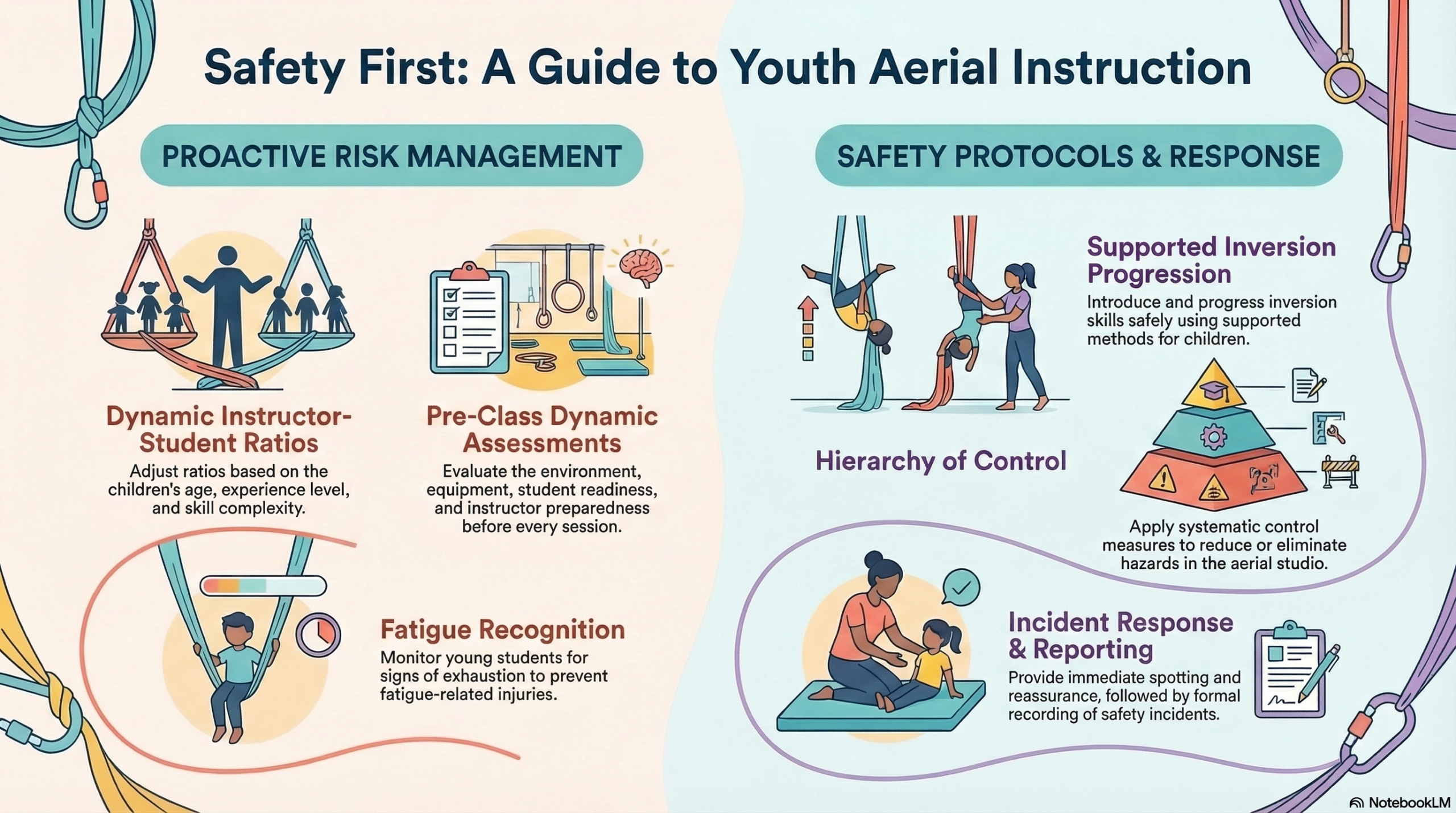
Learning Outcomes – Module 4: Safety, Risk & Injury Prevention
By the end of this module, learners will be able to:
- Identify appropriate instructor-to-student ratios for children’s aerial classes and explain how ratios may change depending on age, experience, and skill complexity.
- Demonstrate an understanding of safe height and matting considerations when teaching aerial skills, including appropriate mat placement and apparatus height adjustments.
- Explain the importance of supported inversions and describe how to safely introduce and progress inversion skills for children.
- Recognise signs of fatigue in young students and apply strategies to manage fatigue to reduce injury risk during aerial training.
- Describe the purpose and structure of a risk assessment and explain why risk management is essential in aerial environments.
- Identify common hazards within aerial and pole studios and outline appropriate control measures to reduce potential risks.
- Carry out a basic dynamic risk assessment before a class, including checking the environment, equipment, student readiness, and instructor preparedness.
- Apply the hierarchy of control to reduce or eliminate risk during aerial instruction.
- Explain the instructor’s responsibility in maintaining a safe training environment, including reporting hazards and responding to incidents appropriately.
Demonstrate knowledge of appropriate immediate responses to aerial safety incidents, including spotting, reassurance, and recording incidents where necessary.