
Scope of Practice
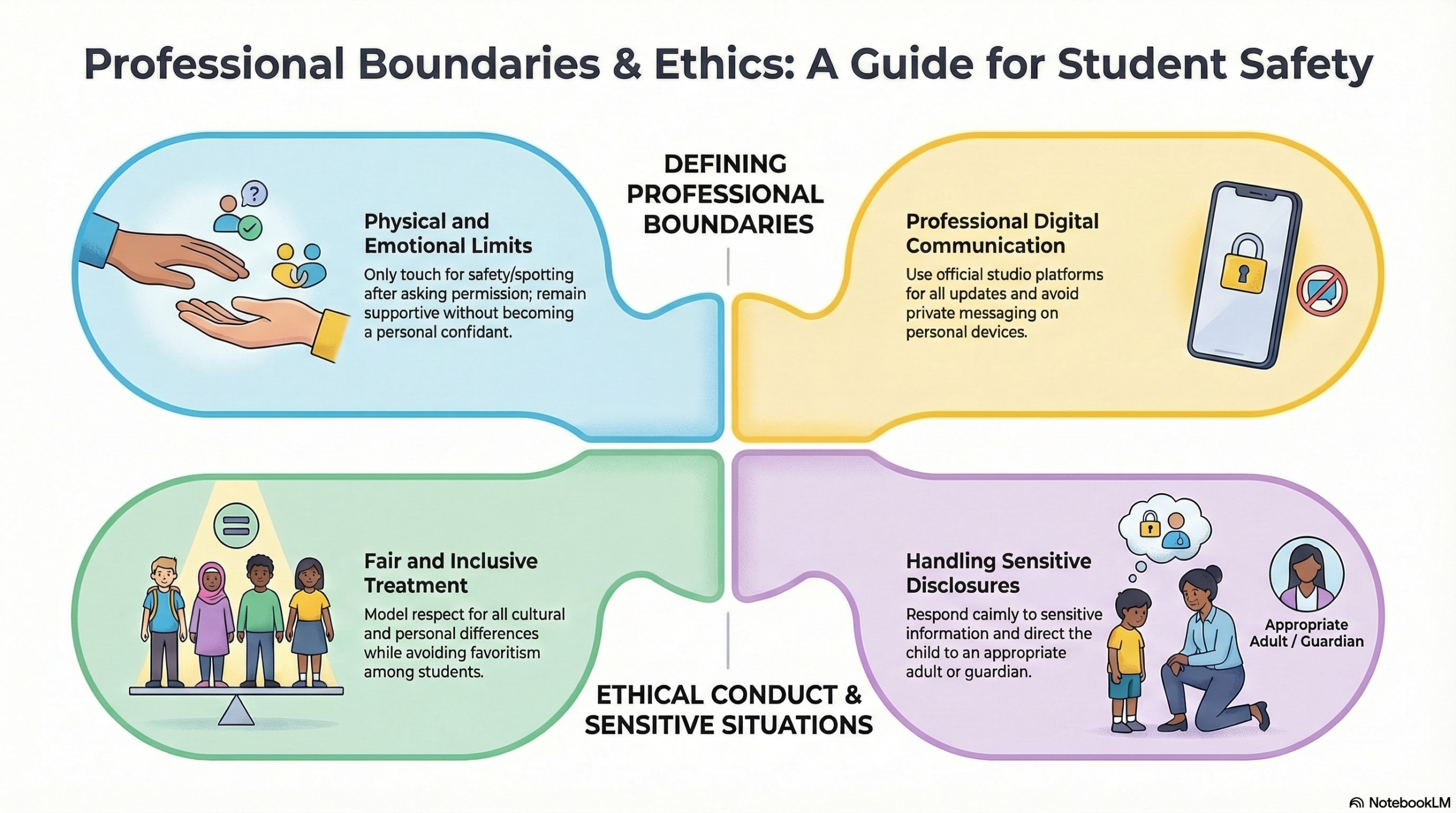
Boundaries & Ethics
Maintaining healthy boundaries is critical when working with children. This protects both the student and you as an instructor:
- Physical boundaries: Only use touch when necessary for safety or spotting. Always ask permission and explain why and what you are going to do.
- Emotional boundaries: Be supportive but avoid becoming a personal confidant. Encourage children to talk to parents or guardians about personal issues.
- Digital boundaries: Keep communications professional. Avoid private messaging students via personal devices where applicable. Use official studio platforms for updates and questions.
- Ethical behaviour: Treat all students fairly, avoid favoritism, and respect cultural, religious, and personal differences. Model inclusivity and respect at all times.
If a child shares something sensitive with you, respond calmly, reassure them, and direct them to an appropriate adult.
Scope of Practice
Understanding your scope of practice ensures you teach safely and confidently while respecting your qualifications:
- Only teach skills and exercises that you are trained and competent in.
- Avoid giving medical, psychological, or nutritional advice unless qualified.
- Recognise your limitations and refer students to professionals and parents or carers when needed.
- Adapt classes to suit age, skill level, and individual needs.
Continuous professional development is essential. Regularly update your own personal training, certifications, attend workshops, and stay informed on best practices for kids’ aerial training.