
Age-Based Coordination Differences
Age-Based Coordination Differences
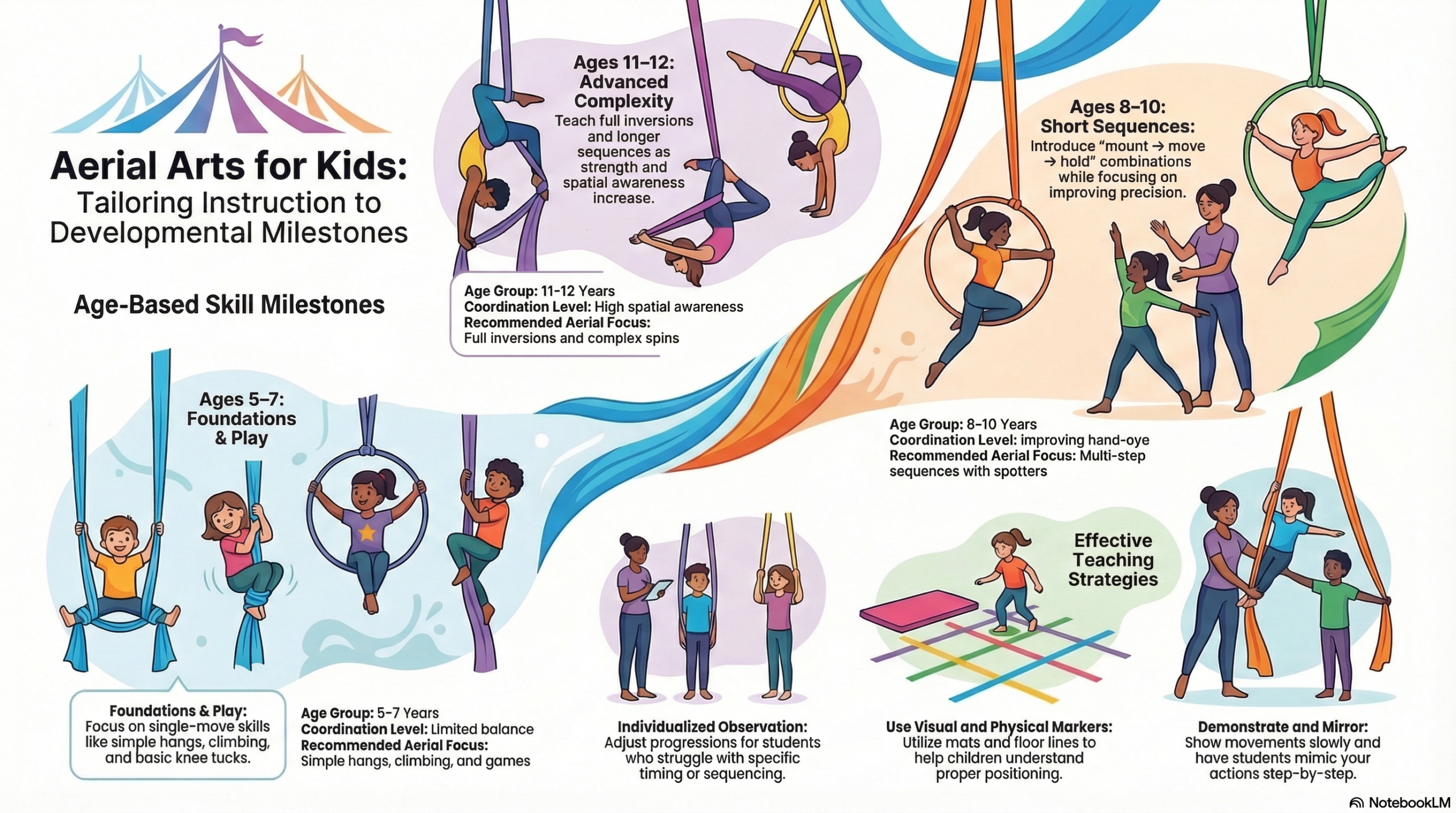
Children’s coordination, balance, and spatial awareness develop gradually, and this affects how they learn aerial skills. Understanding these differences allows you to structure lessons safely and effectively.
Practical Tips for Instructors:
- Break complex skills into smaller, manageable parts.
- Use visual demonstrations, verbal cues, and hands-on guidance.
- Adjust expectations and progressions based on age and developmental stage.
- Encourage repetition and positive reinforcement to build confidence.
Practical Examples by Age Group:
5–7 years:
- May have limited balance and difficulty sequencing movements.
- Focus on simple single-move skills, basic climbing, or hanging. You can always advance or give variations if they complete the skills quickly and safely.
- Use games and challenges to make coordination practice fun.
- Example: Instead of teaching a full straddle, have them practice knee tucks first, then hand placement, then straddle lifts, and finally combine into the complete move.
8–10 years:
- Better hand-eye coordination and balance but still need frequent guidance.
- Can handle short multi-step sequences but may struggle with precision.
- Example: Introduce short combinations like “mount → move → hold” with spotters and mats.
- Encourage repetition and small corrections to improve technique.
11–12 years:
- Greater coordination, strength, and spatial awareness.
- Can perform multi-step sequences with less assistance but may still tire quickly.
- Example: Practice full straddle inversions or short spin sequences, gradually increasing complexity and repetitions.
Practical Teaching Strategies:
- Demonstrate and Mirror: Show moves slowly and have children mirror your actions step-by-step.
- Use Visual Markers: Mats, floor lines, or apparatus markers help children understand positioning and alignment.
- Incorporate Games: Obstacle courses, balance challenges, or “follow the leader” sequences develop coordination while keeping engagement high.
- Spot and Support: Provide hands-on guidance for tricky transitions, especially with younger or less coordinated children.
Observation & Adjustment:
- Watch for children who struggle repeatedly with a movement. They may need a simpler progression, extra practice or teaching a different way.
- Celebrate small improvements to build confidence and reinforce skill learning.
Coordination develops unevenly. Some children may excel physically but struggle with timing or sequencing. Be flexible and tailor your approach to each child’s needs.