
Neurodiversity Awareness
Neurodiversity Awareness
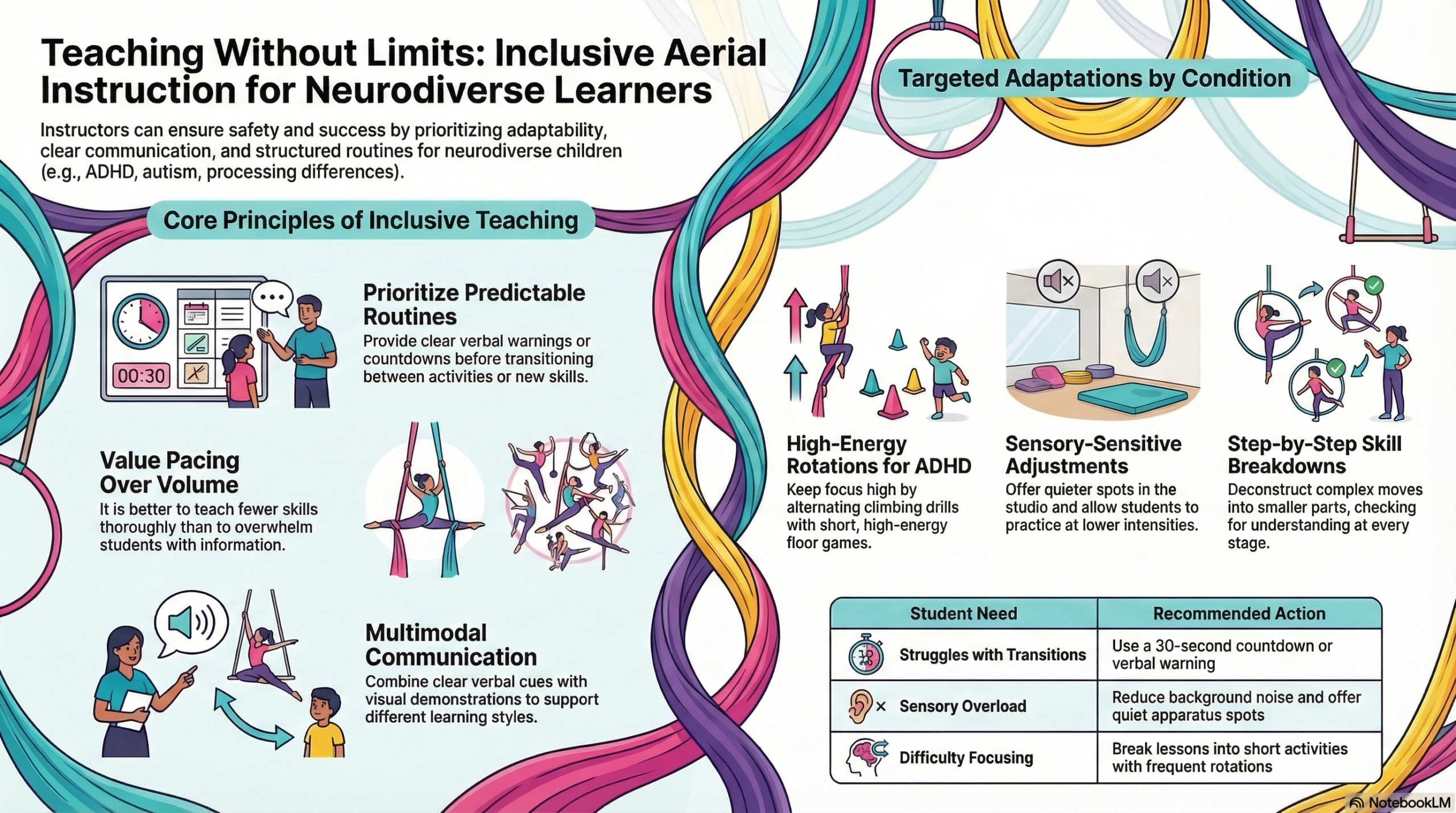
Children may have conditions such as ADHD, autism, dyslexia, or sensory sensitivities that impact how they learn, process instructions, and respond to the aerial environment. Awareness and adaptability are key to creating an inclusive, safe, and effective class.
Practical Tips for Instructors:
- Use clear, consistent instructions with visual demonstrations, verbal cues and then ensuring they have the time and space to implement practice.
- Maintain a predictable routine; give advance warning of changes or new skills.
- Allow extra time for processing and avoid rushing children, it is better to teach less and they are able to process the information, than trying to cram too much in and overwhelming them.
- Be patient with repeated questions or slower progress.
- Provide alternative options or adaptations without singling out the child.
- Encourage collaboration, positive reinforcement, and a supportive environment.
Practical Examples:
Children with ADHD:
- May have difficulty focusing or sitting still for long periods.
- Action: Break lessons into short, high-energy activities with frequent rotations.
- Example: Alternate climbing drills with partner games or short floor exercises to keep attention high.
Children with Autism or Sensory Sensitivities:
- May be sensitive to lights, sounds, or tactile experiences.
- Action: Offer quieter spots on the apparatus or in the studio, reduce background noise, and avoid overwhelming stimuli where possible.
- Example: Allow the child to practice spins or swings at a lower intensity before progressing to full-speed moves.
Children with Processing or Learning Differences:
- May need instructions repeated or shown in multiple ways.
- Action: Demonstrate moves slowly, use verbal cues paired with gestures, and encourage mirroring.
- Example: Break a straddle down to knee tucks → leg positions → full movement, checking understanding at each stage.
Children Who Struggle with Transitions:
- May become anxious when moving between activities or trying new skills.
- Action: Give a countdown or verbal warning before transitions, and provide reassurance.
- Example: “In 30 seconds, we’ll move to ‘another activity’. You can finish this climb, then we’ll switch together.”
Encouraging Inclusion & Confidence:
- Pair neurodiverse children with supportive peers for cooperative exercises.
- Celebrate individual effort and progress rather than comparing to others.
- Example: Recognize effort: “You kept your body really steady on that spin. Great control!”
Observation & Adjustment:
- Note which environmental factors, pacing, or instructional methods help the child thrive.
- Adapt lesson plans dynamically to suit individual needs while maintaining class flow.
- Collaborate with parents or caregivers for insights on what supports the child best.
Neurodiverse children may excel in different ways than neurotypical peers. Focus on strengths, provide clear structure, and offer flexible support to help every child reach their potential.