
Growth Plates & Joint Vulnerability
Growth Plates & Joint Vulnerability
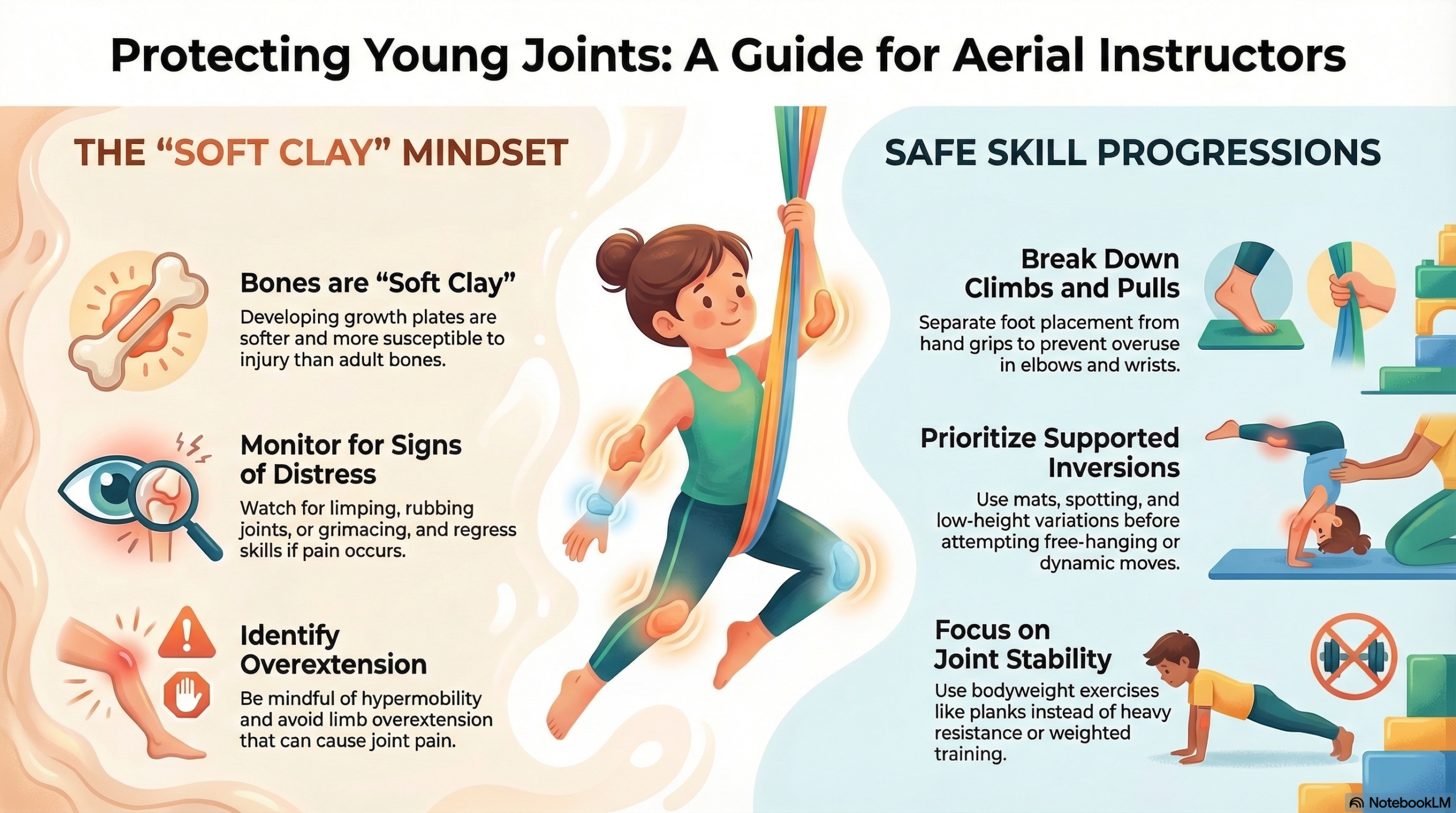
Children’s bones and joints are still developing, particularly the growth plates (epiphyseal plates), which are softer and more susceptible to injury than adult bones. Awareness of these vulnerabilities is critical for safe aerial instruction.
Practical Tips for Instructors:
- Avoid excessive load or repetitive high-impact movements on young joints.
- Use progressions rather than forcing full-range or high-resistance moves.
- Focus on bodyweight control, flexibility, and safe strength-building exercises.
- Monitor students for signs of joint pain, swelling, or discomfort and regress skills if necessary.
Practical Examples:
Inversions & Shoulder Work:
- Use mats, spotting, or assisted moves to reduce stress on shoulders and wrists.
- Start with supported inversions (using a spot or low aerial hoop) before progressing to free-hanging inversions.
Climbs & Pulling Movements:
- Break climbs into smaller stages, e.g., foot placement first, then hand grip, then combine.
- Limit repetitions per session to prevent overuse injuries in elbows, wrists, or shoulders.
Joint Loading in Spins & Drops:
- When teaching spins or dynamic moves, reduce impact by using mats or teaching slower, controlled versions first.
- Avoid abrupt drops from height for younger children; practice partial drops or low-height variations.
Strength Conditioning:
- Prioritise exercises that develop joint stability safely, like plank variations or assisted pull-ups.
- Avoid heavy resistance or weighted exercises on children’s joints.
Lower Limb Awareness:
- For leg-intensive moves (kicks, straddles, split holds), encourage controlled movement to protect knees and hips.
- Use floor exercises to strengthen lower limbs before introducing full aerial extensions.
- Be mindful of hypermobile and double jointed abilities. These two things are different and although you are not able to ‘diagnose’ hypermobility, there may be some signs that you notice to suggest that hypermobility is present. Be aware of the potential overextension in the limbs that can cause pain and overextension.
Observation & Adjustment:
- Watch for signs of discomfort: limping, rubbing joints, grimacing, or avoiding certain movements.
- If pain or discomfort occurs, regress the skill and consider a short rest or alternative activity.
Tip: Think of children’s joints like “soft clay”. You can strengthen them gradually, but excessive pressure or fast, repetitive stress can cause long-term issues.