
Child Protection Principles
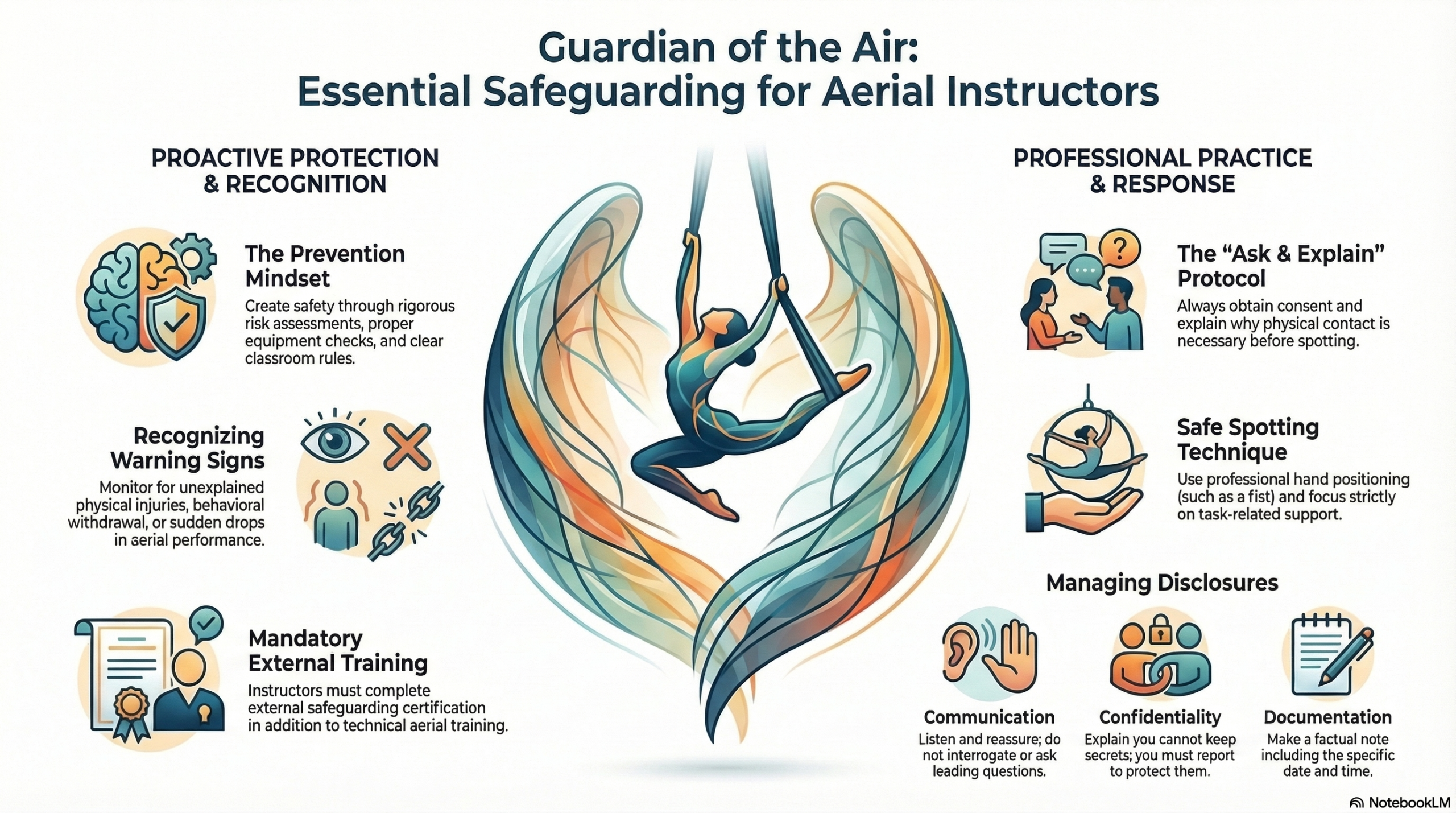
Although it is mandatory for you to complete a separate safeguarding course in a minimum of level one in safeguarding to be able to teach children and vulnerable people, it is also important we touch on safeguarding specifically within aerial. All workplaces, studios and schools must have a safeguarding policy that you must make yourself aware of. If you are a self employed freelancer, you must have your own safeguarding policy.
Child Protection Principles
Safeguarding is at the heart of working with children. As an aerial instructor, you must understand the following principles:
- Every child has the right to safety: Children must be protected from harm, abuse, and neglect in all forms.
- Prevention is key: Create a safe environment by using risk assessments, proper equipment, and clear class rules.
- Early intervention: Recognise and respond promptly to any signs of distress or abuse.
- Confidentiality with responsibility: Keep sensitive information private but report concerns appropriately.
Think of safeguarding as both a mindset and a practice. It’s about anticipating risks, recognising warning signs, and taking action responsibly.
In order to complete the aerial kids instructor training, you are required to complete an external safeguarding training in addition to this training.
Spotting & Appropriate Contact
Physical contact may be necessary for spotting and supporting skills, but it must always be safe and appropriate:
- Spotting techniques: Only use methods you are trained in and support aerial moves safely.
- Ask permission: Always explain why you may need to touch a student and obtain consent when possible.
- Respect boundaries: Avoid unnecessary or prolonged physical contact. Keep interactions professional and task-focused.
- Observe closely: Pay attention to body language and verbal cues. A student may be uncomfortable even if they don’t voice it.
When helping a student by using spotting, position your hands to support safely, where possible create a first with your hand and explain each step, check comfort levels before and during the move.
Managing Disclosures
A child may disclose sensitive information to you. How you respond is critical:
- Stay calm and listen: Show empathy and reassurance, but do not interrogate or ask leading questions.
- Record accurately: Make a factual note of what the child said, including date and time.
- Report immediately: Follow your studio or organisational safeguarding policy. Notify the designated safeguarding officer or equivalent.
- Avoid promises: Never promise to keep the disclosure a secret. Explain that you will report it to protect them.
Your role is to listen, reassure, and report. Not to investigate or judge.
Recognising Concerns
Early recognition of potential abuse or neglect is vital:
- Physical signs: Unexplained bruises, burns, or injuries inconsistent with normal aerial practice.
- Behavioural signs: Withdrawal, aggression, fearfulness, or sudden drop in performance.
- Emotional signs: Low self-esteem, anxiety, or inappropriate sexualised behaviour.
- Environmental signs: Poor hygiene, frequent absences, or neglect at home that affects participation.