
Emotional Regulation
Emotional Regulation
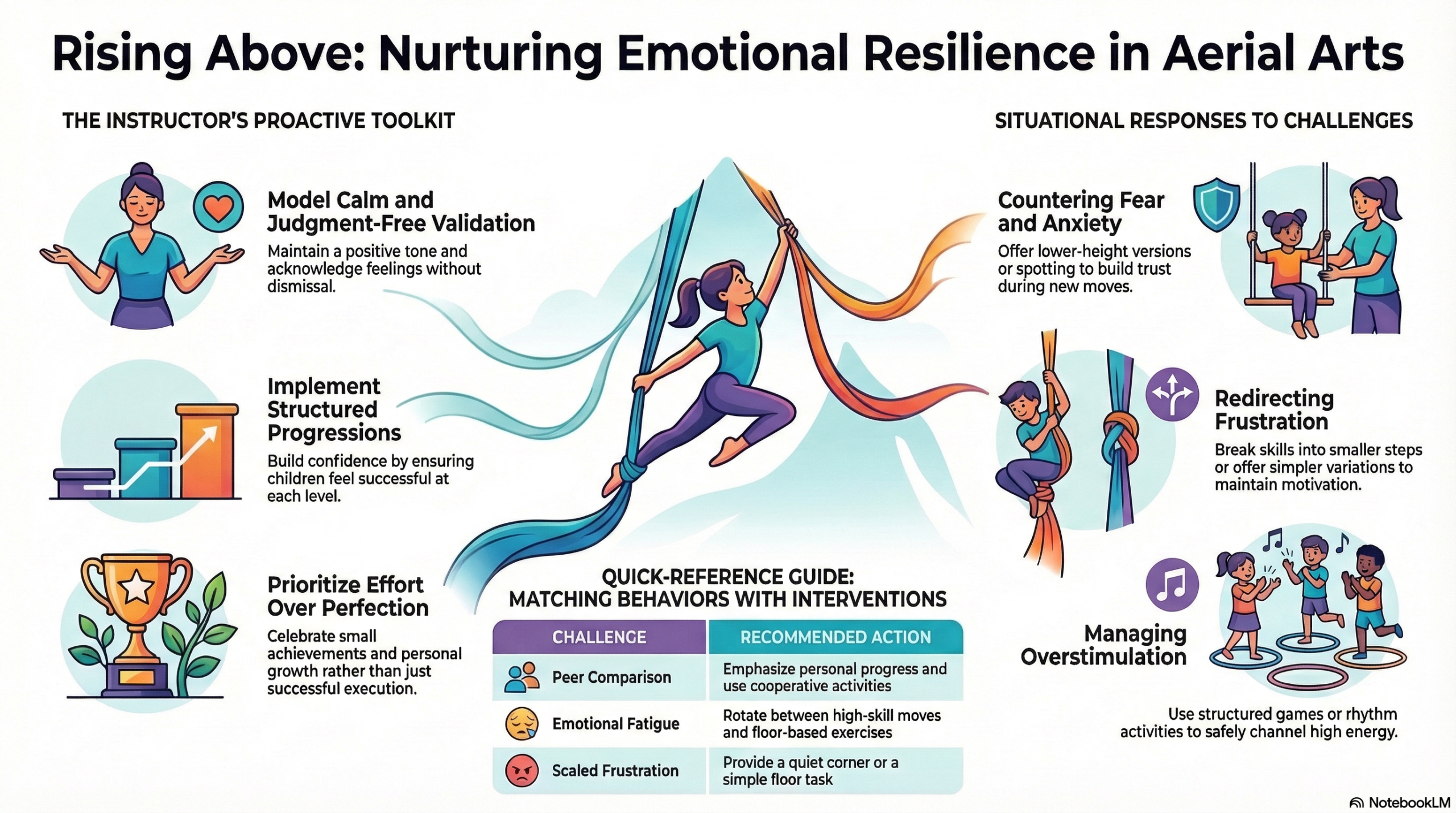
Children’s ability to manage emotions is still developing. In aerial classes, this can show up as excitement, frustration, fear, or disappointment. Supporting emotional regulation helps children stay engaged, confident, and safe.
Practical Tips for Instructors:
- Maintain a calm, positive tone. Even when students are frustrated or anxious.
- Acknowledge feelings without judgment: validate rather than dismiss emotions.
- Provide structured progression so children feel successful, building confidence over time.
- Offer breaks or alternative tasks if frustration escalates.
- Use encouragement and celebrate small achievements to reinforce emotional resilience.
Always ensure participants have water and regularly take water breaks
Practical Examples:
Fear of New Moves:
- A child hesitates before trying an inversion.
- Action: Offer a lower-height version or use a spotter. Reassure them verbally: “You’re safe, I’ll support you step by step.”
- Result: Builds trust and reduces anxiety while still encouraging skill development.
Frustration During Practice:
- A child repeatedly falls during a climb.
- Action: Pause, break the skill into smaller steps, or switch to a simpler variation. Offer praise for effort rather than perfection.
- Result: Prevents discouragement and maintains motivation.
Excitement or Overstimulation:
- A child is overly energetic, running around or rushing moves.
- Action: Give a short structured game or rhythm-based activity to channel energy safely.
- Result: Focus returns, and the class remains safe and productive.
Peer Comparison & Self-Doubt:
- A child compares themselves to others and becomes upset.
- Action: Emphasize personal progress: “Look how much stronger you are this week!” Encourage cooperative activities instead of competitive ones.
- Result: Builds self-esteem and reduces negative emotional reactions.
Supporting Emotional Breaks:
- A child needs a pause to regain composure.
- Action: Provide a quiet corner or a simple floor task they enjoy, then reintegrate them when ready.
- Result: Children learn self-regulation and the classroom remains calm.
Practical Strategies for Class Flow:
- Start classes with a warm-up game to focus energy and attention.
- Use consistent verbal cues and signals to manage transitions.
- Rotate between high-skill moves and playful or floor-based exercises to prevent emotional fatigue.
- Reinforce effort and progress rather than only successful execution.
Observation & Adjustment:
- Note patterns: a child may be consistently anxious with certain skills. Adjust pacing, spotting, or complexity accordingly.
- Recognize when emotional regulation difficulties may indicate underlying stressors or neurodiverse needs and respond sensitively.
Emotional regulation is a skill that develops alongside physical skills. Modeling calm, confident behaviour as an instructor has a powerful impact on children’s responses.