
✅ Key Takeaways
✅ Key Takeaways
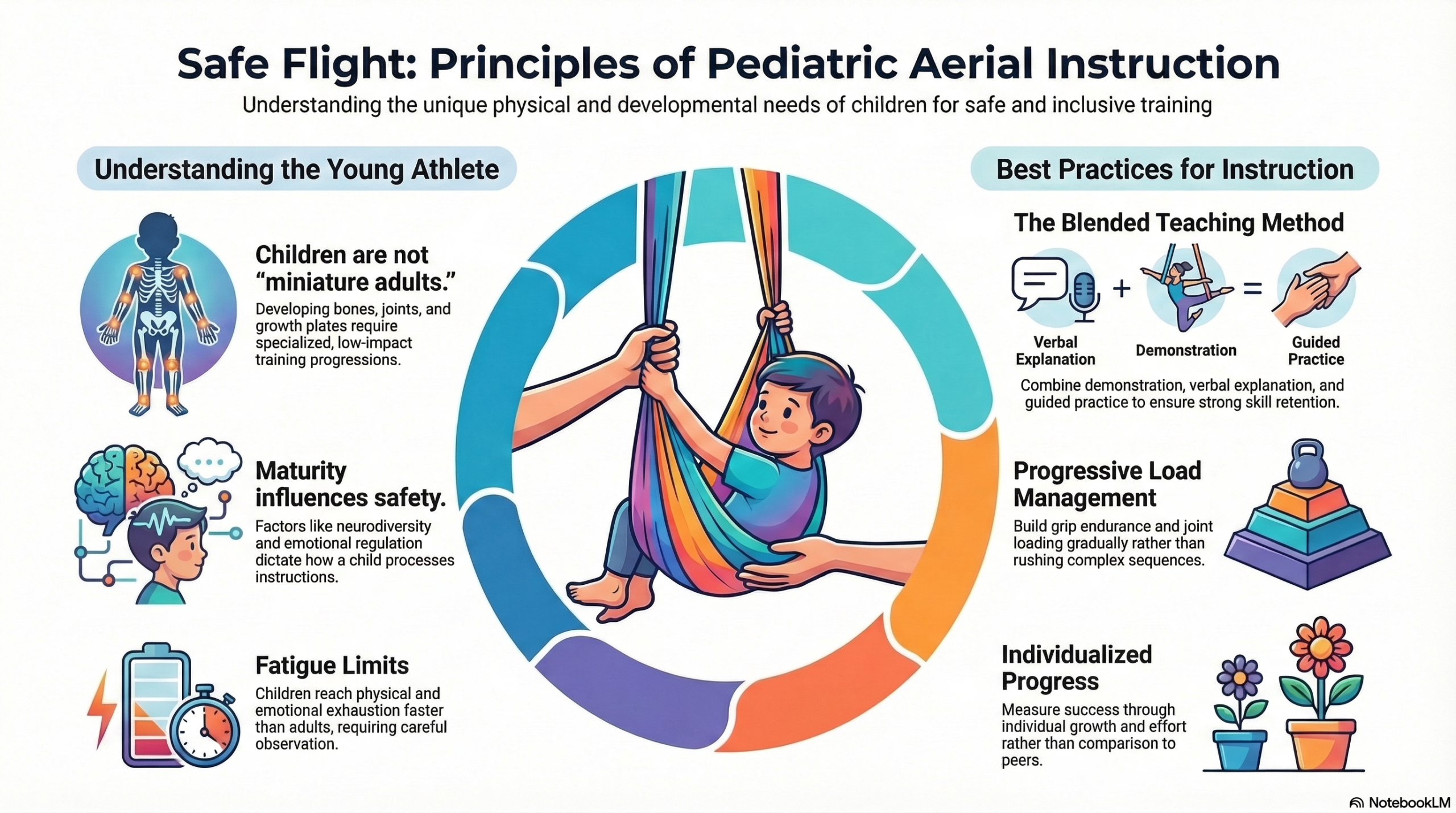
- Children are not miniature adults. Their bones, joints, coordination, endurance, and emotional regulation are still developing, and this must shape how we teach. Safe aerial instruction requires gradual progression, careful observation, and an understanding of growth plate vulnerability and fatigue limits.
- Blended teaching methods. Demonstrating, explaining, and allowing guided practice creates stronger skill retention and more inclusive sessions. Clear, consistent cueing combined with safe repetition improves both confidence and technical ability.
- Age, coordination level, emotional maturity, and neurodiversity all influence how a child learns and responds within a session. Structured routines, manageable challenges, and adaptable pacing reduce frustration and increase safety.
- Grip endurance, joint loading, and complex sequencing should be built progressively, not rushed. Children thrive when effort is recognised, confidence is nurtured, and progress is measured individually rather than through comparison.
- As an aerial professional, your role extends beyond teaching tricks. You are responsible for protecting developing bodies, supporting emotional wellbeing, and creating an environment where every child can learn safely, confidently, and inclusively.