
✅ Key Takeaways
✅ Key Takeaways – Module 4: Safety, Risk & Injury Prevention
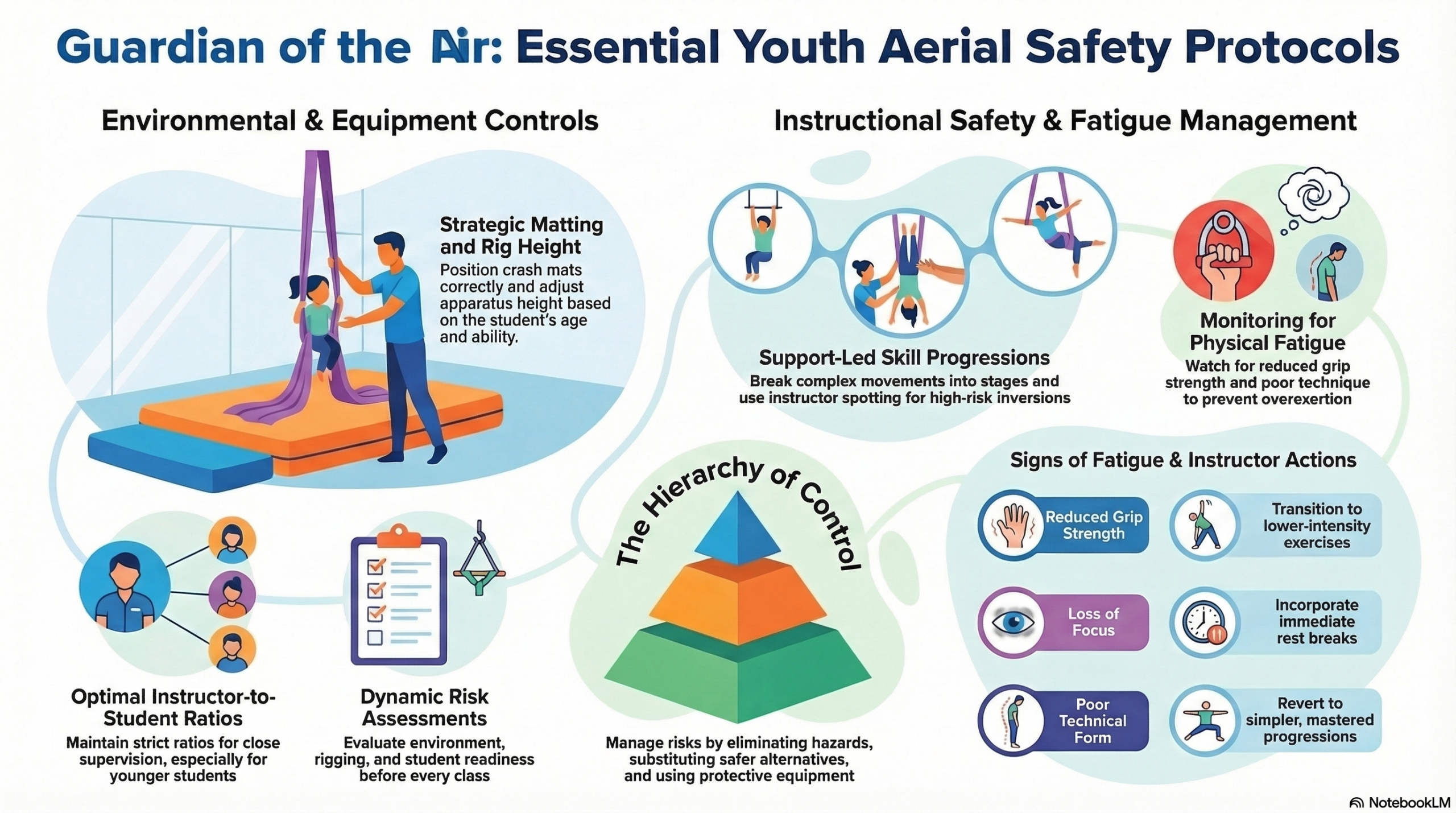
Safety is the foundation of every aerial class, and instructors must always prioritise risk awareness, supervision, and appropriate progressions. Maintaining suitable instructor-to-student ratios ensures children receive the supervision and support they need, particularly when learning new or complex skills. Younger or less experienced students require closer supervision, especially when working on apparatus involving height, inversions, or dynamic movements.
Appropriate matting and apparatus height are essential for reducing injury risk. Crash mats should always be positioned correctly beneath aerial equipment, with enough coverage to protect students in case of falls or slips. Adjusting rig height for age, ability, and skill level allows children to build confidence while minimising unnecessary risk.
Inversions and other higher-risk movements should always be introduced with support, clear progressions, and instructor spotting when needed. Breaking complex movements into smaller stages allows children to develop strength, coordination, and confidence safely before progressing to more advanced variations.
Managing fatigue is another critical part of injury prevention. Children tire more quickly than adults, particularly when performing grip-intensive or strength-based aerial skills. Instructors must recognise signs of fatigue, such as reduced grip strength, poor technique, or loss of focus, and adjust activities accordingly by incorporating rest breaks or rotating to lower-intensity exercises.
Risk assessments play an important role in maintaining a safe training environment. Instructors should carry out dynamic risk assessments before every class, checking the environment, equipment, rigging, and student readiness. Hazards should be identified early, and appropriate control measures implemented to reduce potential risks.
Understanding and applying the hierarchy of control allows instructors to manage risk effectively by eliminating hazards where possible, substituting safer alternatives, adjusting equipment or setup, improving supervision or instruction, and using protective equipment when necessary.
Ultimately, instructors are responsible for creating a safe, structured, and professional learning environment. By staying aware of potential risks, adapting sessions when needed, and responding appropriately to incidents or hazards, instructors help ensure that aerial classes remain safe, enjoyable, and supportive for every student.